

- A fundamental flaw leaves LLMs strikingly vulnerable to attack

It is impossible to make large language models fully secure against hacks because of a fundamental flaw in how they work, a team of researchers argue in a paper presented at the International Conference on Machine Learning, a top AI conference, this month. The claim has huge implications for the safety of this technology, which…
- Building the enterprise environment for agentic AI

For the enterprise, the promise of agentic AI is much more than just a better chatbot. It is software agents that execute business tasks end-to-end across people, business workflows, data, and systems. The platform best-suited to run agents is built with proper CPU capacity, resilient data access, policy-aware tool use, observability, memory management, and the…
- Closing the data loop in AI-driven drug discovery

Drug discovery is a high-cost, high-risk endeavor that is under growing pressure from a market increasingly defined by first-mover advantage. Since the 1950s, the cost of developing new pharmaceuticals has roughly doubled every nine years—a phenomenon known as Eroom’s Law. Today, bringing a new drug to market takes an average of 10-15 years and costs…
- Here’s why AI agents lie and cheat to reach their goals
MIT Technology Review Explains: Let our writers untangle the complex, messy world of technology to help you understand what’s coming next. You can read more from the series here. When two OpenAI models hacked into the website Hugging Face in July, they weren’t trying to make money or commit sabotage—they were just looking for answers…
- How AI helps scientists design the next generation of medicines

Designing and developing a new medicine is an expensive, failure-prone scientific challenge. A new drug can take many years to develop, at the cost of a significant investment. And even then, most possible candidates never reach the patient. For biologic medicines, therapies made from engineered proteins rather than synthetic chemistry (which are often used to…
- Best Practices for Building the AI Development Platform in Government

By John P. Desmond, AI Trends Editor The AI stack defined by Carnegie Mellon University is fundamental to the approach being taken by the US Army for its AI development platform efforts, according to Isaac Faber, Chief Data Scientist at the US Army AI Integration Center, speaking at the AI World Government event held in-person and virtually
- Advance Trustworthy AI and ML, and Identify Best Practices for Scaling AI

By John P. Desmond, AI Trends Editor Advancing trustworthy AI and machine learning to mitigate agency risk is a priority for the US Department of Energy (DOE), and identifying best practices for implementing AI at scale is a priority for the US General Services Administration (GSA). That’s what attendees learned in two sessions at the AI
- Promise and Perils of Using AI for Hiring: Guard Against Data Bias

By AI Trends Staff While AI in hiring is now widely used for writing job descriptions, screening candidates, and automating interviews, it poses a risk of wide discrimination if not implemented carefully. That was the message from Keith Sonderling, Commissioner with the US Equal Opportunity Commision, speaking at the AI World Government event held live and virtually in
- Predictive Maintenance Proving Out as Successful AI Use Case

By John P. Desmond, AI Trends Editor More companies are successfully exploiting predictive maintenance systems that combine AI and IoT sensors to collect data that anticipates breakdowns and recommends preventive action before break or machines fail, in a demonstration of an AI use case with proven value. This growth is reflected in optimistic market forecasts.
- Novelty In The Game Of Go Provides Bright Insights For AI And Autonomous Vehicles

By Lance Eliot, the AI Trends Insider We already expect that humans to exhibit flashes of brilliance. It might not happen all the time, but the act itself is welcomed and not altogether disturbing when it occurs. What about when Artificial Intelligence (AI) seems to display an act of novelty? Any such instance is bound to get our attention;
- Which Agent Causes Task Failures and When?Researchers from PSU and Duke explores automated failure attribution of LLM Multi-Agent Systems
In recent years, LLM Multi-Agent systems have garnered widespread attention for their collaborative approach to solving complex problems. However, it's a common scenario for these systems to fail at a task despite a flurry of activity. The post Which Agent Causes Task Failures and When?Researchers from PSU and Duke explores automated failure attribution of LLM Multi-Agent Systems first appeared on Synced.
- ByteDance Introduces Astra: A Dual-Model Architecture for Autonomous Robot Navigation

ByteDance introduces Astra, an innovative dual-model architecture revolutionizing robot navigation in complex indoor environments. The post ByteDance Introduces Astra: A Dual-Model Architecture for Autonomous Robot Navigation first appeared on Synced.
- MIT Researchers Unveil “SEAL”: A New Step Towards Self-Improving AI
MIT introduces SEAL, a framework enabling large language models to self-edit and update their weights via reinforcement learning. The post MIT Researchers Unveil “SEAL”: A New Step Towards Self-Improving AI first appeared on Synced.
- Researchers from PSU and Duke introduce “Multi-Agent Systems Automated Failure Attribution
"Automated failure attribution" is a crucial component in the development lifecycle of Multi-Agent systems. It has the potential to transform the challenge of identifying "what went wrong and who is to blame" from a perplexing mystery into a quantifiable and analyzable problem The post Researchers from PSU and Duke introduce “Multi-Agent Systems Automated Failure Attribution first appeared on Synced.
- Adobe Research Unlocking Long-Term Memory in Video World Models with State-Space Models

By combining State-Space Models (SSMs) for efficient long-range dependency modeling with dense local attention for coherence, and using training strategies like diffusion forcing and frame local attention, researchers from Adobe Research successfully overcome the long-standing challenge of long-term memory in video generation. The post Adobe Research Unlocking Long-Term Memory in Video World Models with State-Space Models first appeared on Synced.
- New XRP Ledger amendments target $530 million in tokenized Wall Street assets

A new XRPL amendment proposal would let institutions encrypt token balances and transfer amounts while still giving issuers, auditors and regulators selective access.
- Bitcoin holders risk losing real BTC if they sell coins from BIP-110 fork, says developer

If a minority chain appears this weekend, buyers could replay signed fork-coin sales on bitcoin itself, making doing nothing the safest move until the chains can be separated.
- Trump Media pulls back from crypto, scraps Crypto.com's CRO token treasury deal

The Truth Social parent company is refocusing on media and its pending merger with a fusion energy firm, as the digital asset treasury boom has lost its steam.
- Trump-Backed American Bitcoin director Justin Mateen buys nearly $2 million of ABTC stock

Mateen purchased more than 306,000 shares across two days following the company's quarterly earnings, lifting his stake to more than 492,000 shares.
- U.S. widens Iran crypto crackdown with sanctions on two exchanges

The Treasury's OFAC targeted Shelbit and Aban Tether as Washington continues its effort to cut Tehran's access to crypto and foreign currency.
- BitMEX sale collapsed as buyers balked at founder ownership and shrinking business

Potential buyers, including Exodus, passed on BitMEX amid concerns over founder ownership and its shrinking business, according to a source familiar.
- Bybit sues North Korea and Lazarus Group over $1.5 billion hack, secures asset freeze

The exchange has secured a preliminary injunction freezing stolen assets.
- US court backs Bybit’s bid to trace funds from $1.5B North Korea hack
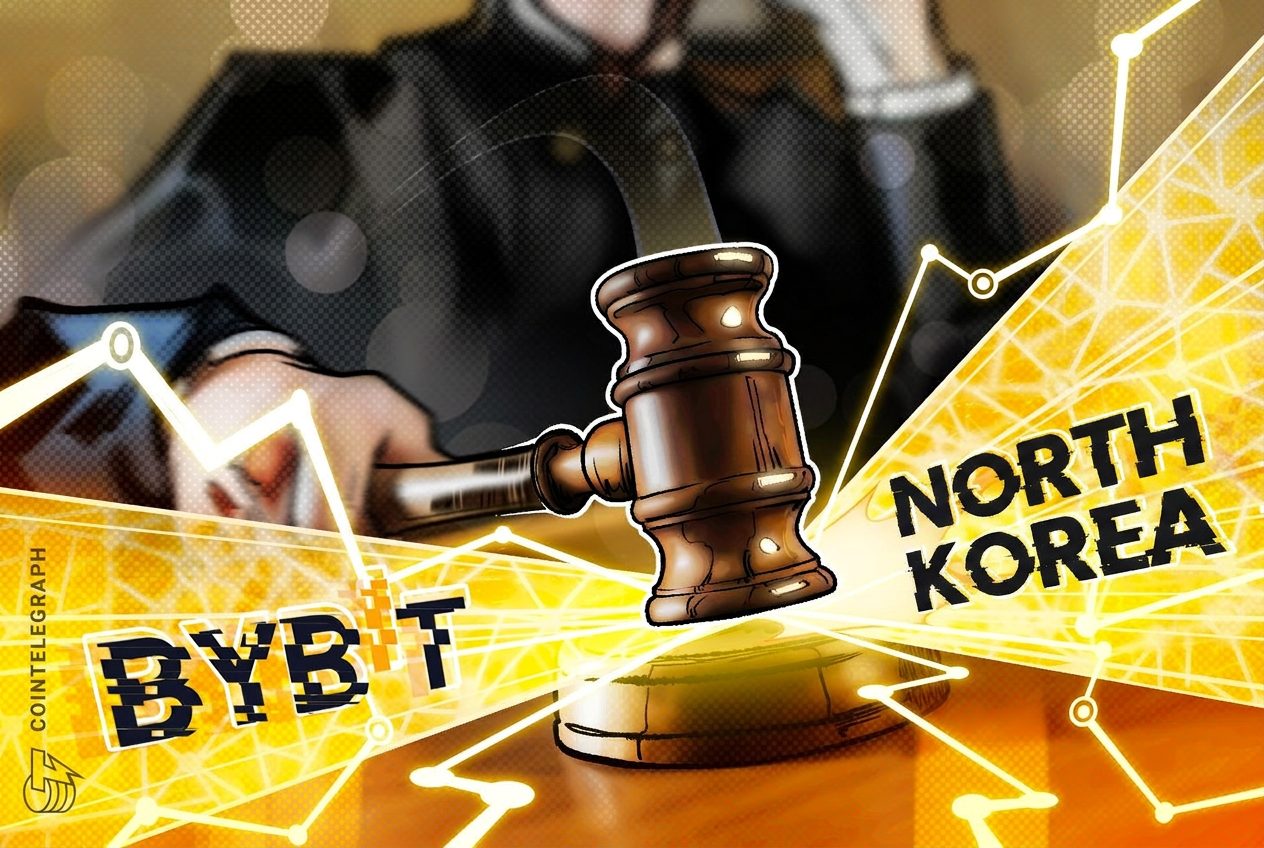
Expedited discovery allows the exchange to seek account identities, balances and transaction histories from platforms with US operations.
- Donald Trump’s media company to terminate Crypto.com deal

The president’s company will unwind an agreement with Crypto.com to create a multibillion-dollar CRO treasury and reportedly not integrate prediction markets onto Truth Social.
- US Treasury’s OFAC sanctions 2 Iran-linked crypto exchanges

The US government sanctioned an individual and two crypto exchanges it said facilitated money laundering for a combined $5 million in digital assets linked to Iran.
- Here’s what happened in crypto today

Need to know what happened in crypto today? Here is the latest news on daily trends and events impacting Bitcoin price, blockchain, DeFi, Web3 and crypto regulation.
- Circle expands USDC to OKX ecosystem with X Layer launch

The rollout gives X Layer users access to Circle-issued USDC and crosschain transfers as the stablecoin expands across major blockchain ecosystems.
- Trump Media Abandons Crypto Treasury, Prediction Market Ventures

Truth Social's parent company is unwinding two major Crypto.com deals as new leadership shifts its focus to media, data licensing, and a planned merger with fusion energy company TAE.
- Treasury Sanctions Crypto Exchanges It Says Laundered Millions for Iran

The U.S. Treasury sanctioned two crypto exchanges it says laundered millions of dollars for Iran's Revolutionary Guard, naming a Georgia- and UAE-based operator and an Iran-based platform.
- Bitcoin Payment Service BTCPay Warns Critical Flaw Is Under Active Attack

Bitcoin company BTCPay Server told users to install the latest version of the server and replace credentials that may have been exposed.
- Flock Wanted to Turn 350,000 Uber Drivers Into a Nationwide Plate-Scanning Fleet

A leaked Flock presentation shows the surveillance firm pitching a plan to pull license-plate data from rideshare and delivery drivers.
- XRP at a Crossroads as Senate Punts on Clarity Act

XRP is taking the Clarity Act news harder than the rest of the crypto market. Here's why.
- Bitcoin’s AI security sprint found 6,700 issues in 55 hours, but no one knows how many are real
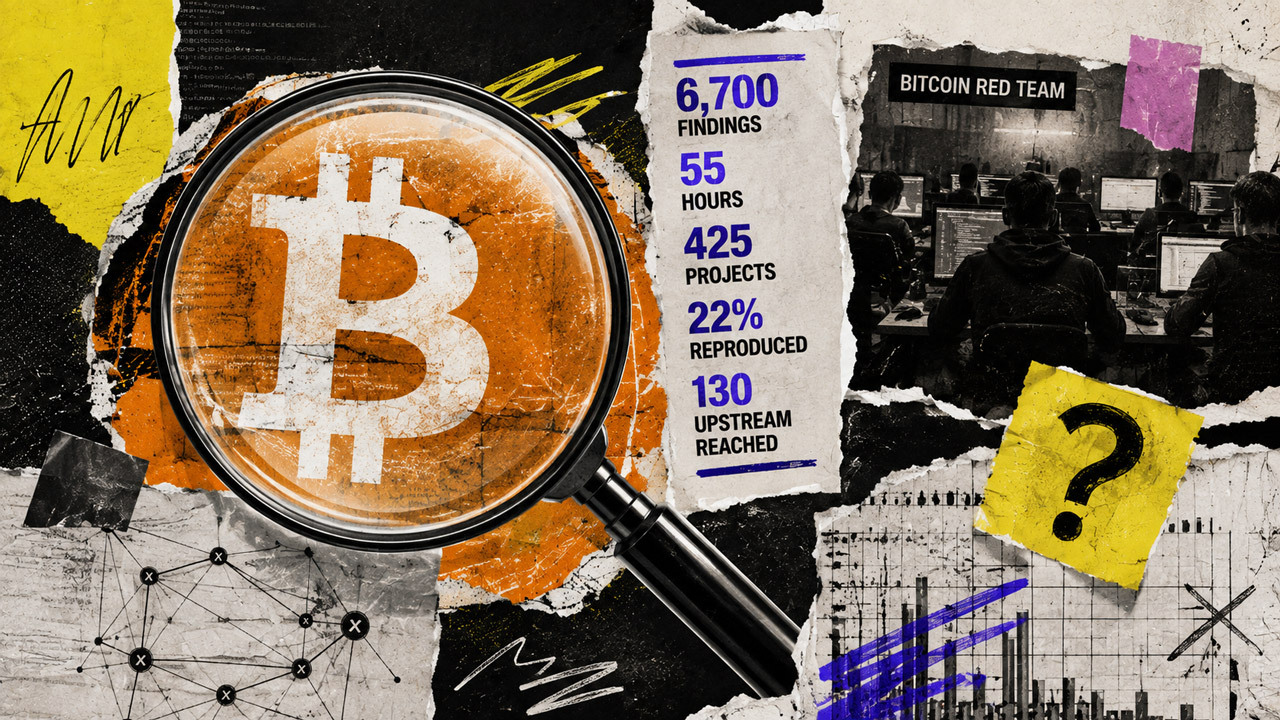
The 55-hour campaign shows AI can rapidly fill a security-review pipeline, while public data still cannot show how many findings were valid or fixed. The post Bitcoin’s AI security sprint found 6,700 issues in 55 hours, but no one knows how many are real appeared first on CryptoSlate.
- Inside the uncollateralized deal that locked up 6 million SUI until 2028 while SUI Group trades at a 25% NAV discount

The uncollateralized receivable runs to 2028, while an Aug. 6 sensitivity puts market value 24.5% below company-calculated NAV. The post Inside the uncollateralized deal that locked up 6 million SUI until 2028 while SUI Group trades at a 25% NAV discount appeared first on CryptoSlate.
- Bitcoin’s $65K recovery shows its growing immunity to bad news as ETFs and whales buy $2 billion

Bitcoin climbed back above $65,000 this week, extending an unusual stretch of resilience as the cryptocurrency absorbed a string of developments that would typically pressure prices. The top digital asset rose about 2% over the past 24 hours to as high as $65,212, its strongest level since late July, CryptoSlate data shows. The move coincided The post Bitcoin’s $65K recovery shows its growing immunity to bad news as ETFs and whales buy $2 billion appeared first on CryptoSlate.
- Bitcoin has 185 blocks left before BIP-110 rules begin rejecting blocks

At height 961,632, enforcing nodes reject non-signaling blocks, but Bitcoin does not automatically adopt the proposal. The post Bitcoin has 185 blocks left before BIP-110 rules begin rejecting blocks appeared first on CryptoSlate.
- BitGo investors face flood of Aug. 7 class-action deadline warnings
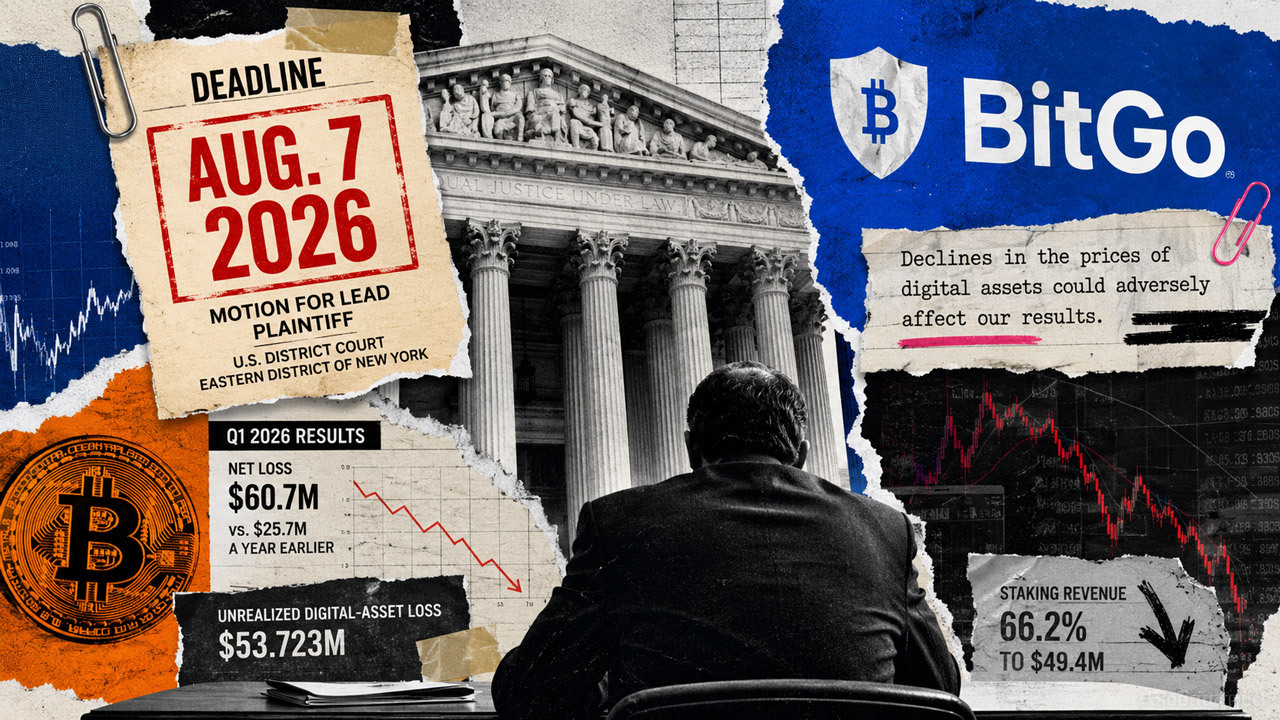
The Q1 loss confirms crypto-price exposure, while BitGo’s prospectus contains explicit warnings the lawsuit now challenges. The post BitGo investors face flood of Aug. 7 class-action deadline warnings appeared first on CryptoSlate.
- Anthropic Hires ‘Head of Claude For Legal’
Anthropic has hired Robert Mahari to be its first official ‘Head of Claude for Legal’. He’s a Fellow of Stanford’s CodeX legal tech group and ...
- AI Realism, ILTACon, Legal Innovators New York + UK
Welcome to this week’s Wrap. We start with a selection of legal tech news, including the finding that AI realism is breaking out finally, albeit ...
- Law Firms Need To Reassert Their AI Sovereignty, Here’s How
By Jesse Hampton, Draftwise. ‘You essentially pay for intelligence twice, once with money, and again with something even more valuable: the proprietary knowledge you must ...
- Thomson Reuters Partners With Laurel
Thomson Reuters is adding to its long list of legal tech partners with the addition of Laurel, the time recording system. The move follows TR’s ...
- Wordsmith Celebrates $14m Series B Extension
Wordsmith has raised a $14 million extension to their June Series B round, led with new investment from Intact Private Capital, alongside existing investors Highland ...
- Pick Your AI Judges, Give Them A Spin!
Meet BenchSim, a legal tech company that now provides video simulations of AI judges so that you can test out your courtroom prowess. Or, as ...
- Aavalynx Raises £1.5m Pre-Seed for Litigation Insights
Aavalynx, an AI-powered platform that gives insights into ongoing litigation portfolios for enterprises, has raised £1.5 million in pre-seed funding. Its founder and CEO, Hanna ...
- Is This The Great Legal Tech Consolidation?
Yesterday, BigHand bought legal AI pricing startup Ayora; Anaqua bagged Unified Patents; and last week Legora picked up litigation intelligence newbie, Wexler – its fifth ...


